Grappling with the Challenges of Managing Mental Health in Africa

In today’s society, mental health is a constant concern for all, irrespective of gender, ethnicity or socio-economic status. Creating awareness and understanding of how to manage mental health in our society today, most specifically in the African continent, is relevant to us all.
Guinea Conakry

In today’s society, mental health is a constant concern for all, irrespective of gender, ethnicity or socio-economic status. Creating awareness and understanding of how to manage mental health in our society today, most specifically in the African continent, is relevant to us all.

The struggles and challenges we continue to face, especially in the past two years have significantly increased. Global mental health record indicates that Covid-19 pandemic triggers a 25% increase in the prevalence of anxiety and depression worldwide (WHO 2022).

This paper will attempt to analyse the challenges in managing mental health in the African continent, with specific reference to my motherland: Guinea Conakry. Guinea Conakry is situated in West Africa, bordered on the Atlantic Ocean. It is known for the Mount Nimba strict nature reserve, in the southeast. The reserve protects a forested mountain range rich in native plants and animals, including chimpanzees and the viviparous toad.

On the coast, the capital city, Conakry is home to the modern Grand Mosque and the national museum, with its regional artefacts. Guinea’s population is about 13.13 million (World Bank, 2020). Its mineral wealth makes it potentially one of the richest countries in the African continent, with the largest deposit of bauxite, and iron ores in the world. Yet its population is among the poorest in West Africa ( https://www-bbc-co-uk 2021). French is the country’s official language but is used almost exclusively as a second language. There are six ingenious languages: Pular( or fula), Maninka, Susu, Kissi, Kpelle and Toma(https://translators without borders-org, access 25.07.2022).


Guinea Conakry has recently faced some political instability like most Francophone countries of Africa. On October the 1st 2021, Colonel Mamady Doumbouya was sworn in as president less than a month after unseating Alpha Conde’ in a coup on the 5th of September 2021, this has had consequential damages on both the political and socio-economic progress of the country.

Both ECOWAS and the African Union condemned this unprecedented move and suspended Guinea Conakry from its membership. These international bodies equally imposed sanctions against the coup leaders and demanded a return to constitutional order within six months.

However, this was not the first time the country was confronted with an unprecedented socio-political crisis. In 2011 Guinea Conakry was the first country ever to be referred by the UN Security Council to the UN Peacebuilding Commission. This was as a result of the violent repression and organised rape against pro-democracy protestors by the military on September 28th 2009 and to the legacy of military dictatorship ( Medeiros et al 2015).

The first Guinea health care system was structured to provide primary health care at the district level.

Before we continue, let us examine what good mental health is and what it is not. The general expectation and understanding of good mental health is about” feeling positive about ourselves and others; being able to form good relationships, and having the resilience to overcome challenges” ( https://patent-info.org.uk). It is

quite understandable that if one has good mental health, one will most likely be able to feel, express and manage a range of positive and negative emotions. Carry out everyday tasks and look after themselves; this might include diet, exercise, adequate sleep, working, learning and social activities, and some understanding of  being responsible and accountable for their actions.

The first Guinea health care system

Evans (2020) argued that in many ways mental health and physical health are intertwined, everyone has it, it can fluctuate from good to poor, and we need to take care of it ( Buckley, 2020). Arguably, good mental health might have a different meaning to each one of us, however, some common ground and awareness of being able to think, feel and react in a way that you need and want to live your life as fully and independently as possible is of general acceptance worldwide.

Good mental health doesn’t mean that you always feel happy or that you never have bad moods or bad days. Equally, it is important to recognise that anxiety, low mood, or other symptoms of mental health conditions are overwhelming or challenging to cope with, it’s unfortunately likely that one’s coping mechanism is inefficient, so seeking help from mental healthcare professionals is a must at this stage.


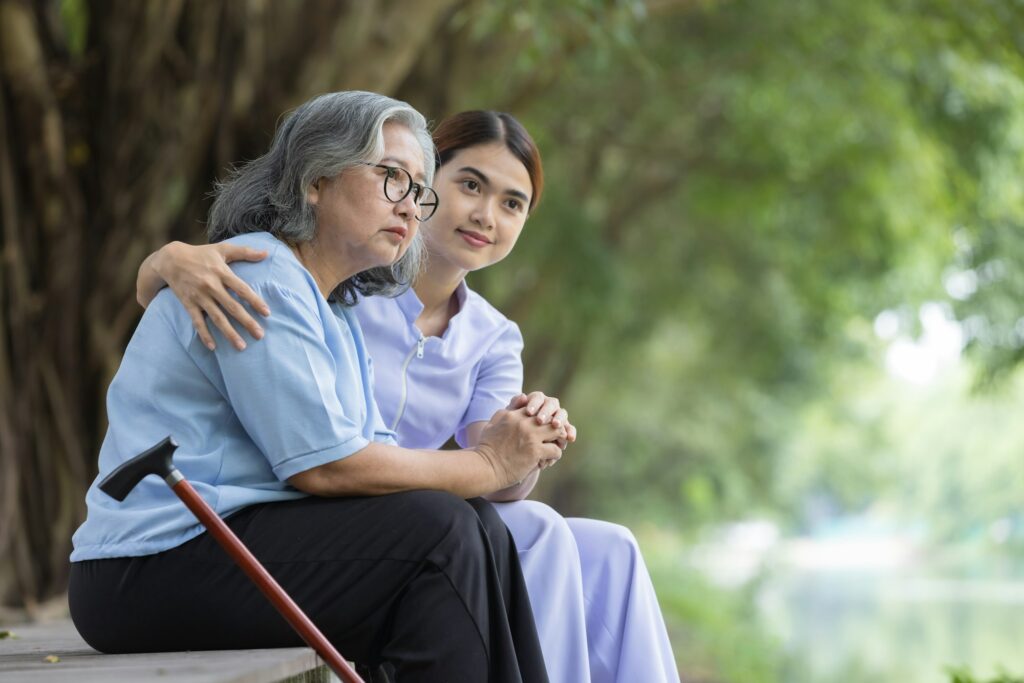
Geriatric mental health nurses assess the mental health status of elderly patients

The Ebola virus epidemic

The Ebola virus epidemic (2013- 2016) severely exacerbated existing stress points in the provision of care delivery.

The hospital has its psychiatric facility headed by Dr Siaka Sangare. The centre has approximately 30 beds for inpatients, 8 psychiatrists, and no qualified nurses or psychologists for a population of over 13 million habitants. These figures are nothing of a surprise, considering only 8% of the National budget is dedicated to the country’s healthcare provision.

In most Western countries in Europe such as France, Belgium etc., their health care expenditure constituted 11.5 percent of the national budget in 2017, which amounted to 266 billion EUR. Every aspect of Guinean daily life can potentially contribute to some form of mental health problems.

The country has one of the largest poverty rates in the African continent. Based on the most recent official survey data, 43.7 percent of Guineans lived below the national poverty line in 2018, equivalent to 5.8 million people living in poverty (World Bank Databank, 2022).

Guineans suffer greatly from poverty, disease and malnutrition, while many other African nations such as Ivory Coast, and Senegal, are beginning to grow, Guinea is stagnant or retrogressing. The poverty rate increased by 9 orientations in October 2017. In light of this high poverty figure, it is not surprising that the proportion of the population in the right mental state is gradually declining. According to the latest WHO data published in 2020 suicide deaths in Guinea reached 892 of 0.90% of total deaths. The age-adjusted death rate is 12.33 per 100,000 of population ranks.

Universal Health Care (UHC) Partnership

Universal Health Care (UHC) Partnership Guinea supported the adoption of a national health development plan for 2015-2024.

The country regularly faces serious sanitary crises: Such as the Ebola crisis with recent resurgence, Lassa fever, and measles (EU International Partnerships Academy, 2019). As mentioned earlier, the COVID-19 pandemic has had a significant impact on every single one of us, every country worldwide had to follow the health and safety guidelines recommended globally by WHO, Public health institutions and other government health bodies. Guinea with its well-known health issues, poverty, and limited or non-existent health care facilities in some rural areas of the country has been among the countries with the highest health care alert with the spread of coronavirus.

With this concern in mind, the European Union implemented its development cooperation and assistance programmes and projects, aiming to improve the health sector, particularly in maternal and child healthcare. PASSA 2 (Projet d’Appuie au renforcement du système de la Sante en Republique de Guinee) (the Health System Strengthening and Support Project), in continuity of the previous PASSA project, continuously and effortlessly working to improve the health service in the country.

It aims at improving access to essential quality care, primarily focusing on improving reproductive, maternal and child health care services, along with community health as a whole. EU funding has permitted training on triage, and the diagnosis of acute respiratory infections in the context of COVID-19, providing for the input of 44 doctors and medical staff.

The World Health Organisation emphasises the important role mental health plays in achieving global development goals. Depression is one of the leading causes of disability, suicide is the fourth leading cause of death among 15-29-year-olds (WHO, 2019). Guinea has only one major University hospital in the capital city of Conakry in conjunction with the national hospital, Donka.

Guinea is a member of the Economic Community of West African States (ECOWAS) but despite its political intentions, geo-strategic position and ratification of all the community’s conventions, the country has been less active in regional integration because of its economic and political instability (WTO). Subsequently, a third of young Guineans are jobless, unemployment rate is propelled by 21.57% from 5.0% in 2019 to 6.1% in 2020. In an attempt to minimise these alarming figures in the country, the World Bank emphasises the importance of social inclusion in achieving its goals of ending extreme poverty and boosting shared prosperity.

The World Bank’s Environmental and Social Framework (ESF), which applies to all investment project financing, emphasises that Social inclusion is essential for all of the World Bank’s development interventions and for achieving sustainable development.

The recent IDA20 Final Replenishment Report has an increased focus on inclusion, with 14 out of 41 Policy Commitments clearly stating how paramount inclusion is for all, and the need to embrace the current crisis as an opportunity to focus on ensuring more inclusive systems that allow society as a whole to be more resilient to future shocks, whether health, climate, natural disasters, or social inequalities (The World Bank. Org access Prior to the COVID 19 pandemic, reviews of available evidence have suggested some rising rates of self-reported mental distress, especially among adolescents ( Choi, 2018). Blomqvis et al (2019) highlight higher rates of internalised mental health symptoms, especially among girls. Higher rates of teenagers reporting feeling low in the HBSC survey or reporting feelings of anxiety about school work in the OCECD’s PISA study, along with some increase in self-harm and suicidal rates. More time spent online, and stresses and pressures due to excessive use of social media, have also been identified as areas of concern for children and adolescents’ mental health (Kowalski et al, 2014).

In Europe, During the Covid 19 pandemic, young people’s mental health deteriorated at a higher rate in the general population. Young people in Belgium and France were more likely to be experiencing depression or anxiety than the old-age population in 2020, while in a survey of young people in the United Kingdom, 80% of respondents admitted that the pandemic had made their mental health worse. In comparison, 14% admitted that their mental health was worse as a result of the pandemic (Sante Publique France, 2020).

In 2018, Abdoulaye Sow et al, carried out a research study based on the stigmatisation of mental illness by medical students in Conakry, the research aimed to investigate possible attitudes of stigmatisation among first and final-year medical students registered at the University of Conakry faculty of medicine in Guinea.

The results were not only alarming but also quite frankly disappointing, as most students, although well-educated on the topic, shared the general population’s prevailing attitudes of discrimination, a generalised acceptance of mental illness as a simple form of madness, with a clear preference for traditional medicine in addressing these issues. The most concerning aspects of these findings are the attitudes portrayed by some of the students about the stigmatisation of mental health issues, it is therefore undoubtedly valid to question any potential progressive solutions in tackling the issues of mental health in Africa, most specifically in my motherland: Guinea-Conakry.

REFERENCES

Choi A (2018) Emotional well-being of children and adolescents- OECD iLibrary (https://www.oecd.org

De Man J et al (2017) Patient-Centred care and People-centred health systems in sub-Saharan Africa: Why so little of something so badly needed? In J Pers Cont Med 2017, 6 (3): 162- 73

Dr Medeiros E, Dr David M.R, Our and Jasmine Van Deventer ( 2015): Mental Health and Psychosocial Support in Guinea Conakry

Evans M ( 2020): What is ‘good mental health ‘?

ECOWAS ( Economic Community of West Africa States)

WHO (2019) Mental health (https://www.who.Int: health-topics)

Sow A, De Man J Bart Criel (2020) BMC Health services research, 20 Article number 61

admin_wam

admin_wam

Keep in touch with our news & offers

Subscribe to Our Newsletter

What to listen next...

Media camera focuses on capturing the vibrant pulse of a buzzing media event

Ipolowo oja l’agunmu owo is a Yoruba adage that translates to; promotion is the magic potion for business, and this is true for the sports business. Sporting events are organized throughout the year in Nigeria and West Africa, yet, these events are held with little or no relevance; stadiums are nearly empty, there is insufficient …

Friends sitting on the court talking after a basket game

Extraordinary! That’s the word that best describes the performance of certain African countries in the 2022 Commonwealth Games and like we would always say, a win for one is a win for all. The 22nd edition of the Commonwealth Games officially known as XXII Commonwealth Games and commonly called ‘Birmingham 2022’ after the host city- …

Comments

Leave a Reply

Your email address will not be published. Required fields are marked *