Sports Cars and Motor Sports in West Africa

Sports cars are loved by many people across the globe. The fiery horse engines, radiant gloss paintings, rugged body with sturdy aesthetics, and the unbeatable speed of these vehicles make sports cars unique in their way. While motorsports and the production of sports cars in West Africa are unpopular, a few Africans have broken the mold to put sports cars made in Africa by Africans on the world map.
Race Cars

Sports cars are loved by many people across the globe. The fiery horse engines, radiant gloss paintings, rugged body with sturdy aesthetics, and the unbeatable speed of these vehicles make sports cars unique in their way. While motorsports and the production of sports cars in West Africa are unpopular, a few Africans have broken the mold to put sports cars made in Africa by Africans on the world map.

In the early 70’s vehicle manufacturing through Completely Knocked Down (CKD) assembly gained notoriety under a military government looking to kickstart the Nigerian automobile industry. At the time, brands like Volkswagen and Peugeot assembled vehicles in Nigeria, with some of the components sourced or manufactured locally. These include; tyres, windshields, and windows from Triplex Glass (Ibadan), paint from Berger Paints (Lagos), and batteries from Exide Nigeria LTD (Ibadan). However, a decline in production, several economic recessions and a lag in technological advancements have hindered these efforts.

Motorsports refers to the group of competitive sporting events that primarily involve the use of motorized vehicles.

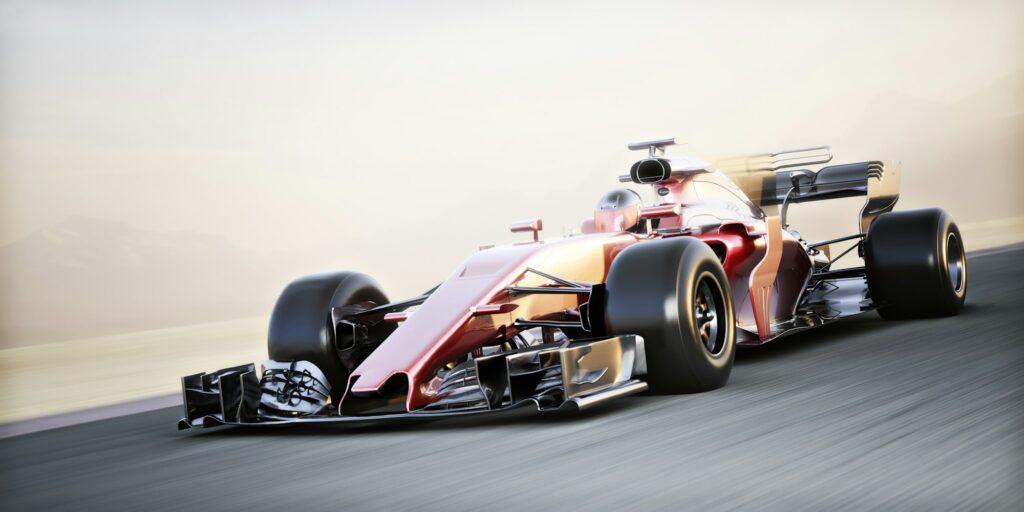
Race cars are used mostly in motosports contests, and their engine power output is substantially higher than that of a conventional sports car. In West Africa, efforts to uplift sports are underway, and can be traced by the efforts of a few innovators:

  1. THE AKOFENA

In September 2020, a video which showed 18-year-old Kelvin Odartey, a Junior High School (JHS) student, driving to school in an automobile made out of scraps went viral. Kelvin received considerable admiration on social media for driving his self-built car to the exam location to complete his final paper. The young innovator was awarded a scholarship by Kwadwo Safo Junior, Owner and CEO of Kantaka automobile company in Ghana, with a pledge to scale his efforts with a remake of the Akofena. By the end of November 2020, the Akofena had been fully remade and later called ‘The Kantaka Akofena’

  1. THE BENNIE PURRIE

Jerry Isaac Mallo, the Creative Fabrication Engineer Credited with Inventing Nigeria’s First Carbon Fibre Sports Car The Bennie Purrie, a red sports car made in Plateau state, Nigeria, is composed of recyclable materials that make it environment friendly. To protect the car’s hood and exterior, the Bennie Purrie uses recycled fibreglass, commonly known as reinforced plastic, rather than materials like aluminium alloy or galvanized sheets.

The car’s first model features a 2.0-litre engine that produces 130 horsepower and can go from 0 to 120 kilometres per hour in 12 seconds. One of the safety benefits of having a plastic car is that it will break down as if it were made of glass, as opposed to a metal car, which will crumble when it collides with a resisting force.

Globally the motorsport community is one of the tightest.

In Africa, this has given rise to a budding and closely-knit motorsport community with numerous racing series and sub-communities, consisting of various types of vehicles and a plethora of racing teams. Some of the more recent racing series

in West Africa are following in the steps of Nigeria’s RoadX Race Series which takes place at the Motorsport Raceway, Evbuobanosa, Edo State and the Fanfaro Auto Rally in Ondo State and is open to almost any kind of vehicle.

An appraisal of motorsports in West Africa shows that although many people consider it for fanfare, there is a general lack of interest, heightened concerns about safety, and a large cost to afford this type of adrenaline sport.

Theodore “Theo” Samouris, Vice President of the BMW Club

“I wouldn’t say there is a lack of interest in Africa entirely. If you go to South Africa, the motorsports scene there is thriving and there are plans to bring F1 back to the country. In West Africa, maybe the government haven’t seen the potential in motorsports tourism.”

Theodore “Theo” Samouris, Vice President of the BMW Club, Nigeria tells us in a phone chat. Samouris is a longtime lover of sports and emerged as the 2019 Champion of the RoadX Racing Series in Nigeria.

For those who consider motorsports a dangerous or high-risk activity, experts say that safety measures can be put in place to allay any tension. While speaking with Robson Omasheye, a Director at Fastlane Motorsports we gained more insight on the growing trend of motorsports in the West African community and efforts to make racing enjoyable and safe for all.

“At the previous Autofest, we had marshals from the Lagos State Traffic Management Agency (LASTMA), with Police and health and safety (HSE) marshals on the ground, but there is only so much that these people can do, compared to risks posed by the crowd of spectators who want to get the best views,” Omasheye said while describing risk mitigation strategies on race day. Across the world, accidents do happen in events like these and we have been fortunate to not have had any incidents due to support in terms of improved locations and Safety Marshals.

The low popularity of motorsport in Africa cannot be blamed on little love for cars but mostly because motorsports is a capital-intensive initiative. From building race tracks, to cars, logistics, research and development.

Too many Africans lack food to eat or are busy studying to have a better life, coupled with the spiritualism in Africa, many may see car racing as too risky because one is putting his/her own life on the line and to some, ‘it’s not worth it’.

Seeking people’s opinions on the streets of Abuja, Nigeria, here are some of the responses recorded; What could be the reason for many Africans’ lack of interest in car racing?

Race car
Public Views about Motor Sports

Person 1: Fear

Person 2: Lack of Awareness, sponsors and above all, facilities

Person 3: Interest and knowledge of the sport/ cars. Plus, bad roads

Person 4: No 1 reason is not lack of interest; no 1 problem is the African economy overall. Check out the list and see the price of sports cars, when you convert it to naira you will have an idea of how expensive car racing is. Now one thing that sets Europe and America apart is that those foreign drivers too do not necessarily have to be able to afford the sports cars at the beginning because they have tons of sponsors but the truth is that before you start driving a sports car you must have at least done a number on regular cars – The Toyotas and Hondas and Mercedes-Benz of this world, before graduating to Ford mustangs, Aston Martin, then moving to the Ferraris.

So, when you look at the pricing of regular cars too, you will see that the average Nigerian cannot afford to get even a used one and talk less of a brand new one. For example, I would probably participate in car racing if I was able to afford it, you look at secondary school kids overseas driving to school, then you will understand why sponsors are usually quick to identify talented drivers early enough but when you couple African Economy with absence of car loans, then you’d understand that these and lack of participation is the reason why many Africans appear uninterested.

Do you consider racing too risky?

Person 1: I think it is

Person 2: Very risky, coupled with the lack of facilities and equipment. We don’t even have standard medical equipment for our topmost game(football), not to mention the less important Racing. If a motor falls now, how do you handle emergencies?

Do you consider racing too risky?

Person 3: Well, they are risky, but considering the safety measures, gadgets and low casualties recorded, it is safe enough.

Person 4: Yes, it is very risky but just like many other professions, it is an art, and to me it should be done only within a controlled atmosphere, when there is enough money involved the damages that can follow would not matter, however for the safety of the public it should only be allowed under a controlled atmosphere.

You may have seen the media franchise ‘Fast and Furious and the undeniably beautiful use of cars for sport and drifting. Drifting is one of the most technical car race competitions where one can participate because it requires a sense of focus and calculation.

Some people do it for the fun of it while others do it to make money by betting placements. Drifting is illegal in many countries because it is considered careless driving.

However, depending on your country, some race tracks could allow drivers to drift in a competition but within the confines of their race track and under close supervision.

(You may want to find out what your local laws say about it) It may surprise you to know that there are practising drifters across Nigeria. Many middle-class individuals may not join the train because they can’t even afford a car and drifting with a car is considered insane to some, because one may want to ask oneself ‘why should I drift a car and run the risk of crashing it for sport for the sport when I don’t even have one to drive around, or when I haven’t even bought one for my mum’ the lower-class people on the other hand, may ask themselves ‘what is the use of drifting a car which is likely to be crashed when there is no food to eat or why put myself in harms’ way practising insane skills when I haven’t gotten my life together? When I don’t have a family yet.

One wouldn’t blame them though, because an average driver needs all the energy he can get, at least from food.

Car Drifting

Of course, cars are fancy and sporty but what are the chances of becoming a practicing driver in West Africa? Governments are not so invested in it because the underlying interest in viewing the races is not there, and that mostly as said earlier, is because the people have priorities. Survival first, then ambition.

The mindset flows from an average African parent because they would probably only see death looming around the child who wants to practice. Cars are considered luxury so why would you want to drive for a living? The narrative needs to be changed to build the sport because this hits deep into everything, including viewing the races. A lady once said she would probably die of hypertension if she watched car racing or drifting.

That being said, there is an enormous amount of value the sports bring to the tourism industry and the economy at large through sponsorship and advertising, Jobs, Transportation, logistics, Hospitality, etc.

In a worldwide study commissioned by The Fédération Internationale de l’Automobile (FIA) and carried out by EY-Parthenon to measure the economic and social impact of the motorsport industry.

The study highlights the significance of the motorsport industry, which is estimated directly and indirectly at about 160 billion euros in total gross output annually and 1.5 million total paid jobs. It lays claim that motorsport contributed to the rebound of the economy post-COVID-19 times.

To many others, it is such a beauty to behold from the incredulous painting to the artistic race tracks, down to the referees, the fierce body and the engine.

Interview with Theodore “Theo” Samouris

Q: How best can we promote motorsports tourism in Nigeria and turn over some skeptics with the existing events in the country?

Theo: First off, other players is trying to promote the community, there’s motorcycle events, BimmerFest which we do, Fanfaro oil Autofest in Ibadan amongst others. We all just try to have these events across various locations nationwide because we have little to no external or government support, we’re not necessarily in competition with each other, and go as far as showing support for one another and the community as best we can.

In some cases, like in Togo where the Togo Urban Race will be taking place in a few weeks, there has been immense support from the Togolese Government with roads being cordoned off for the event amongst other things.

Q: Where do you see motorsports in Africa and particularly Nigeria in 10years, in terms of events, sponsorship and following?

Theo: In Nigeria, the following is huge. You can tell that Nigerians love motorsports and cars and the community is ever growing.

Our events are usually free of charge and we do not yet make any profit from them contrary to what a lot of people think.

However, we could do with more sponsorship especially from more brands as we fund most of our events ourselves, but they tend to shy away from our events when they hear motorsports saying it is dangerous or unsafe. We know this isn’t entirely true.

Take a look at F1 for instance, Heineken and LVMH’s Moet Hennessy are some of the major sponsors even though it is unsafe to operate a motor vehicle while under the influence. This gives them a platform to promote safe driving and a diverse advertising demographic.

admin_wam

admin_wam

Keep in touch with our news & offers

Subscribe to Our Newsletter

What to listen next...

Media camera focuses on capturing the vibrant pulse of a buzzing media event

Ipolowo oja l’agunmu owo is a Yoruba adage that translates to; promotion is the magic potion for business, and this is true for the sports business. Sporting events are organized throughout the year in Nigeria and West Africa, yet, these events are held with little or no relevance; stadiums are nearly empty, there is insufficient …

Friends sitting on the court talking after a basket game

Extraordinary! That’s the word that best describes the performance of certain African countries in the 2022 Commonwealth Games and like we would always say, a win for one is a win for all. The 22nd edition of the Commonwealth Games officially known as XXII Commonwealth Games and commonly called ‘Birmingham 2022’ after the host city- …

Comments

Leave a Reply

Your email address will not be published. Required fields are marked *