

By now it is a well-known fact that climate change affects all aspects of our lives. It should therefore come to no surprise that it also has an impact on something we all enjoy very much –chocolate.

By now it is a well-known fact that climate change affects all aspects of our lives. It should therefore come to no surprise that it also has an impact on something we all enjoy very much –chocolate. Now, what exactly does climate change have to do with the cocoa plant and therefore with our chocolate? We will get to the bottom of this connection in the following.
It is impossible to describe the current state of cocoa without acknowledging the tremendous impact that the Coronavirus pandemic has had on the sector.
Cacao is a critical cash crop for much of West Africa, particularly Ghana.
Although it is impossible to tell what the future will bring, this Barometer attempts to look beyond the current situation, towards a sector where things will have returned to ‘normal’. Our problem analysis and recommendations are largely unaffected by Covid-19. However, the pandemic has had some major impacts in the short term, and a few longer term effects will also be felt.
Covid-19 has exposed existing weaknesses around health and wellbeing. Cocoa farming communities were vulnerable to health risks already, with high rates of pre-existing health conditions as a result of extreme poverty, lack of adequate nutrition, as well as insufficient access to the most basic healthcare.
Having said that, current data does not suggest that the pandemic has had a significant direct health impact – or at least, not a reported one – the reasons for which fall outside the scope or expertise of this Barometer.
Nevertheless, there have been several effects for cocoa farming communities globally, including an increase in the costs of daily living, for farming inputs, and for health care services (FCCI 2020).
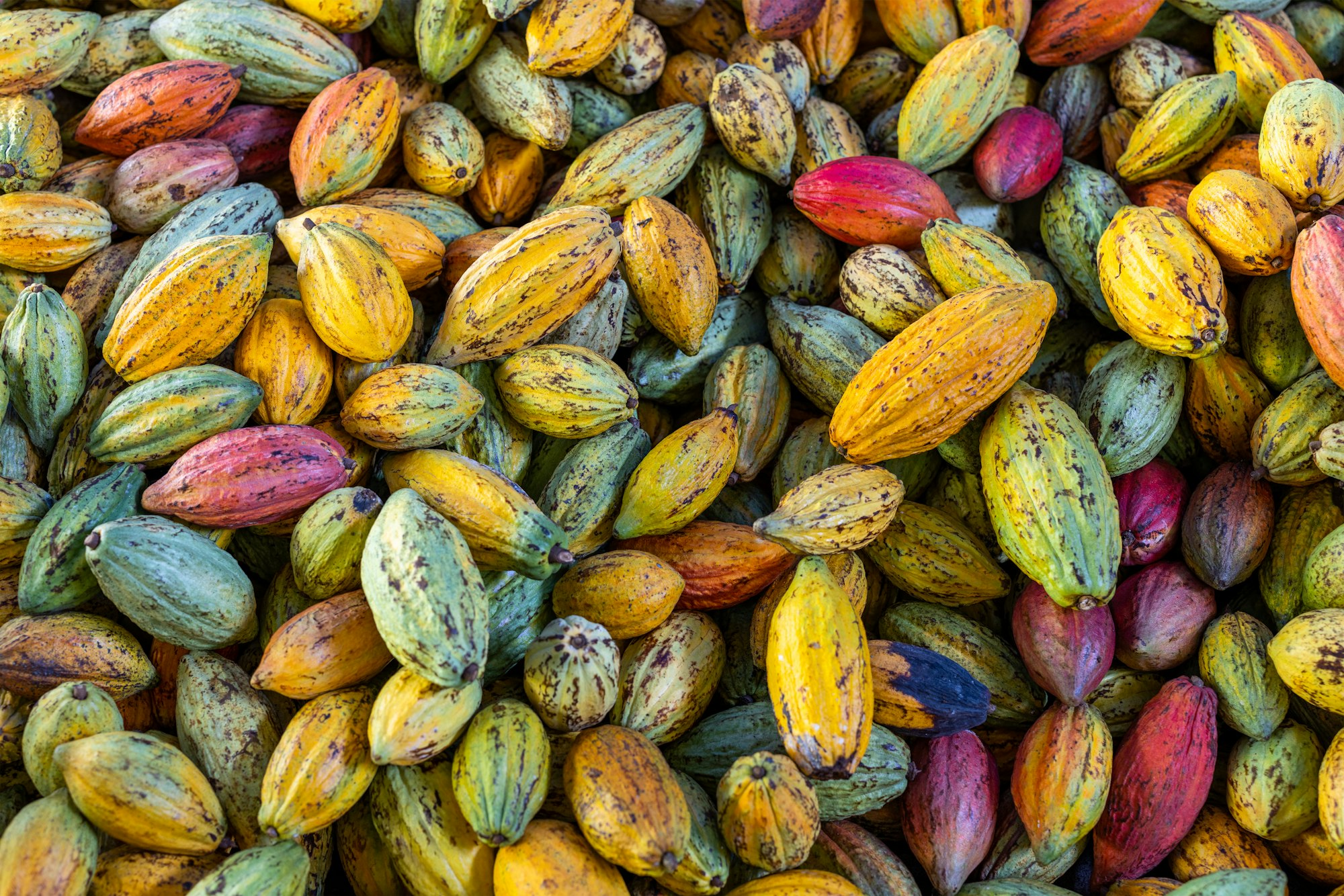
The cocoa tree and its needs
The closing of schools – although it was an understandable measure – put children at risk of exposure to child labour, even if temporarily. There has also been a marked decrease of the world market price, partly driven by a reduced demand for chocolate due to the pandemic. In that light, the timing of the introduction of the Living Income Differential in Ghana and Côte d’Ivoire has been very fortuitous. Though data is scarce, it is suggested that many farming communities saw a loss of current and future sales, payment delays, and experienced many other financial consequences.
For the longer term, the global recession caused by all the lockdowns and restrictions is expected to keep chocolate demand lower than originally expected, in a market that already was dealing with a structural over-supply of cocoa. This will cause downward pressure on global prices, with all the ensuing effects for farming households already in dire poverty.
The cocoa and chocolate industry has responded to the crisis on several levels. Some companies made use of their supply chain communications to inform farming communities on important public health announcements, using farmer communication systems, radio broadcasting, texting, even calling farmer coopera-
tives. Additionally, the sector put forward emergency relief, both in kind – distributing soap, buckets, water, and food) and in cash to cross-commodity relief funds such as the Red Cross, Care and the World Economic Forum’s relief fund. Whether the funds and goods have been spent as promised is not clear at the time of writing. Transparent reporting on the spending and impact of the emergency relief is much needed in the coming months, also so that lessons can be learned for future waves of this and other potential pandemics. At the outset of the pandemic, the cocoa sector restricted travel.
Online conferencing tools have become ubiquitous in the sector, almost to a point of overkill. However, online meetings – whether in plenary or bilaterally – are no substitute for the relational character of much of the interaction that was taking place prior to the pandemic. Over the past years, that relational dynamic has enabled a dialogue between actors that has made cocoa a unique sector, willing to engage issues and starting to move towards essential solutions. If cocoa is to continue in this constructive atmosphere, solutions are going to need to be found on how to strengthen the relational aspects in a digital era. Cacao trees are sensitive to drought conditions and aWhere’s contiguous, in-time weather data show that the months (June-August) experienced very low rainfall for much of the Cacao production areas of Ghana. These trends could negatively impact the GDP of the country and the livelihoods of millions of small-holder cacao farmers. With aWhere’s in-time and historical weather data, this region can build Economic Resilience to Climate Change and plan for potential impacts to cacao yields. The two maps below show August P/PET as well as the 7-day forecast for P/PET. While conditions have been dry for southern Togo, southwestern Nigeria, and much of Ghana and Ivory Coast’s cocoa producing areas, there is some rainfall in the forecast and the growing conditions for cacao and other food crops is likely to
improve. This should provide relief to farmers who have been experiencing drier than normal conditions. As cacao is produced by small-holder farmers, the human dimension could have dramatic impacts. Farmer income will be negatively impacted, which creates cascading challenges of an inability to pay laborers (so they suffer job loss) and as resources become more constrained, child labor may increase as more families cannot afford school fees.
Cacao production is likely to fall. This will impact the GDP of the country and the livelihoods of millions of small-holder cacao farmers. aWhere weather data and models can help cacao producers across West Africa adapt to weather variability and changing production ecologies, and support policy development to deliver economic resilience to climate change in agriculture, energy, health, and trade (domestic and international). With timely insights, farmers can take appropriate action to account for increasing weather variability, such as changing crops or varieties, timely planting, fertilizing, harvesting and grain conditioning operations to maximize yield, quality and food safety. “(From an organization)” “We at fairafric make a difference in the world of chocolate. For instance, we make sure the people at the beginning of our chocolate production can live a good life. All our farmers receive an organic premium of 600 USD per ton of cocoa they produce, which is added to the government-fixed cocoa price. However, if there are climate-related crop failures, poorer quality cocoa beans or diseases of the cocoa tree, even a premium is no longer sufficient to ensure a good standard of living for the cocoa farmers. In this article we will look at the consequences of climate change on the sensitive cocoa plants and thus on the farmers.
The cocoa tree and its needs
living for the cocoa farmers. In this article we will look at the consequences of climate change on the sensitive cocoa plants and thus on the farmers. Around 70% of the world’s cocoa is grown in West Africa, mainly in Côte d’Ivoire and Ghana. The climatic conditions in these regions are ideal for cocoa cultivation: there is a lot of rain during the rainy season, in between there are dry periods with plenty of sunshine, high humidity and warm, but not too hot, temperatures all year round. Cocoa trees are very special and sensitive plants. If you wonder what makes them so special check out our blog post about bees on cocoa plantations. The trees need specific weather conditions to ensure a strong growth and to enable them to bear ripe cocoa pods. As soon as the climatic balance is disturbed, for example by too much rain outside the rainy season or too long dry periods, the cocoa plants suffer. Too long dry periods and lack of rain lead to the death of young cocoa plants, but too much rain can lead to increased insect and fungal infestation (G. J. Anim-Kwapong, E. B. Frimpong). Due to the sensitivity of cocoa plants, climate change has extreme effects, not only on cocoa cultivation and thus on the lives of cocoa farmers, but also on the quality of chocolate.
The problems for cocoa farming caused by climate change
The change in climatic conditions in West Africa causes several problems for cocoa cultivation. The following explains the three most common problems Consistent inputs in area of cultivation and time spent result in lower yields In the past, the cocoa farmers could rely on their trees, which, if well cared for, guaranteed the income of the entire family. The profits from the cocoa harvest are usually the main income of the families, from which procurements, school fees and medical bills are paid. However, in recent years, farmers had to anticipate more and more uncontrollable crop failures due to climatic changes. Good care is no longer enough to ensure a secure income; it depends on the weather conditions whether the profits from the cocoa harvest are sufficient or not. In order to get the most out of the cocoa trees despite the ever-decreasing harvest, some farmers use environmentally damaging production methods such as strong pesticides and narrower plantations. This leaches out the soil to such an extent that it will soon be necessary to move to other cultivation areas. Additionally, more land is being abandoned in regions where there is not enough rainfall or where temperature have risen too much. Thus, the amount of land available for cocoa cultivation is diminishing.
Spread of diseases
In addition to climate change, cocoa plants are particularly at risk from a virus: Cacoa Swollen Shoot Disease, also called CSSD. It makes the leaves change colour, the trunk swells and the tree dies completely within a few years. This disease is caused by badna viruses which are found on the African continent. Since the cocoa tree originates from South America, it has no natural resistance to these viruses. In fact, the changing climatic conditions also favor the spread of the virus.
Solutions for sustainable cocoa cultivation under fair conditions
As difficult as the situation looks, it can be seen as an opportunity: as a chance for sustainable organic farming and for fairer payment for farmers. Fairafric procures its cocoa from the first organic cocoa initiative in Ghana. There we see the improvements that organic farming brings for the trees, the farms and the farmers. The cocoa plants are more robust, the soils are healthier and the ecosystem is intact thanks to diversified cultivation, so fluctuations in rainfall and temperature and the CSSD cannot do as much damage. So-called “green barriers”, a strip of forest around the cocoa plantation, prevents the virus from reaching the cocoa trees. Larger plants on the plantation provide shade and mitigate excessive temperatures. Such sustainability initiatives will become increasingly important in the future. However, organic farming alone is not enough for sustainable management. The cocoa must be sold at reasonable price so that families of cocoa farmers can make a good living out of it. Only if ecological and social factors are taken into account, we can sustainably save the future of cocoa trees in West Africa – despite climate change and diseases.
Adaptation and Mitigation Approaches in Ghana
Farm Rehabilitation
Both Dr. Anim-Kwapong of CRIG and Peter Okyere Boateng of COCOBOD Deputy Executive Director of Monitoring and Evaluation mentioned that they are looking into grafting as a solution to rehabilitating some of Ghana’s very old farms faster both in maturing and production. They have selected a few farms in various regions to run pilots. However, they were both quick to add a word of caution; grafting is dangerous because many cocoa farms in Ghana are affected by CSSV which affects every part of the tree. Accidental introduction of infected material into a healthy farm has the potential to destroy the entire farm. At a minimum the surrounding eight to ten trees should be cut down. Solidaridad mentioned grafting as a path for increased productivity and argued that the government should not be so hindered by the possibility of spreading CSSV.
Agroforestry
Agroforestry is one of the most common adaptation and mitigation strategies promoted and mentioned as being implemented by farmers. Shade trees can reduce the amount of pesticides needed, which increases soil health, and can create extra income from the selling of the timber. However, 20 years ago full sun cultivation was promoted and the majority of shade trees were cut down. Agroforestry is still in the initial stages of reintroduction in Ghana. A majority of farmer respondents mentioned incorporating shade trees of some type on their cocoa farm as a response to the changes in climate. Eight farmers mentioned intercropping plantains with cocoa, which can serve as shade for younger cocoa plants. This is supported by the literature according to Vaast and Somarriba, farmers in West Africa have interest in planting more types of trees in their farms to sustain cocoa, diversify revenues, and improve their adaptation capacity (Vaast and Somarriba 2014). Many NGOs, private sector companies, and government agencies are promoting agroforestry. COCO- BOD’s Peter Boateng stated that they have trained their farmers in the benefits of permanent shade trees; however, they caution farmers on too much shade, because this can cause an increase in pest and disease infestation. COCOBOD is currently growing shade trees. Dr. Anim-Kwapong noted that CRIG is promoting proper shade cover to minimize evapotranspiration from trees and soil and slow down the tree metabolism which will increase the tree’s production longevity. He also mentioned that agroforestry is good for the environment in general because it increases Ghana’s carbon stock. According to Dr. Anim- Kwapong, cocoa trees need 70% shade and permanent shade trees should be planted a year in advance of cocoa trees if starting a new farm. Agro Eco’s West Africa Regional Manager, Willem-Albert Toose, argued that 18 shade trees per hectare should be planted, but farmers may need to plant quadruple that number to have any impact. Agro Eco is also conducting research to understand how to get more farmers to plant shade trees.
Good Agricultural Practices (GAPs)
One of the important cocoa GAPs is shade management, through pruning and spacing, to manage the shade canopy. Twelve out of thirteen farmers mentioned pruning as a common pre-harvest activity and four of them mentioned that the training they received on pruning was one of the most valuable trainings they had participated in. However, a few of the farmers when asked about their challenges on the cocoa farm mentioned pruning. They explained that they were doing the pruning the way they had been taught, but the canopy still seemed too crowded. In our conversations with various key informants, it became clear that farmers may be pruning, but they are reluctant to cut as much as they should, which causes overcrowding. After two decades of failed interventions across the cocoa sector, cocoa farming communities are still battling the effects of poverty, child labour and deforestation. The 2020 Cocoa Barometer report is a rallying call to action for all stakeholders to push forward and deliver on their promises to end deforestation and human rights abuses in cocoa supply chains. Twenty years into rhetoric, the challenges on the ground remain as large as ever. Poverty is still the daily reality for virtually all West African cocoa farmer families, child labour remains rife, and old growth forests continue to be cleared to make way for cocoa production. Now is an important window of opportunity to move towards justice, as momentum for change is gathering across different stakeholders. Thanks to campaigning NGOs, the last two years have seen an increasing number of chocolate companies asking for regulation; significant global actors like the European Union are committed to putting legislation in place; and the world’s two largest producers of cocoa, Côte d’Ivoire and Ghana, have formed a partnership to drive up the price for cocoa farmers. But to seize this moment, it is vital that the sector learns from its mistakes, else it risks repeating them. This report finds that the last two decades of interventions have failed for three main reasons. Firstly, efforts have only been voluntary, not mandatory, meaning that across the sector, actors are failing to do what they need to. Within the multitude of government-driven covenants, national multi-stakeholder platforms and sector-wide collaborations, there are no penalties for non-compliance, neither is there enforcement to meet targets. Ironically, however, those at the bottom – cocoa farmers often living below the poverty line – do lose their sustainable cocoa certification if they do not comply. Whilst we’ve seen a significant increase in regulatory processes and commitments to due diligence, they are limited without accountability, transparency and equitable enforcement. Secondly, whilst bad farming practice has been addressed, the underlying problems that exacerbate extreme poverty – including low cocoa prices, lack of infrastructure, and no transparency and accountability as you move higher in the supply chain – remain unchallenged and unsolved. There needs to be recognition that in its current form, the business model for high yields of cocoa means poverty for farmers and excessive profit for chocolate manufacturers. It’s time this changed. Thirdly, efforts to solve complex issues of injustice and unsustainability in the cocoa sector have not been inclusive or holistic enough. Instead of inviting farmers and civil society to take a respected seat at the decision-making table, problems have been assessed using a top-down industry-based approach. This serves the interests of industry and government, rather than the producer farmers and their communities. Acknowledging how previous interventions have failed points us to alternative pathways that can put an end to deforestation, poverty and human rights abuses in cocoa supply chains. The report makes three key recommendations:
Regulation that changes the system, rather than penalizing the farmers
Recognizing that bad farming is not the problem but rather a symptom of a deeply unfair system, the report advocates for systems change and regulation that creates an enabling environment. Current forms of certification and farm-based standards increase pressure on farmers: instead, we need laws that hold the powerful accountable, rather than laws which demand that farmers change. Compliance criteria are imbalanced and need restructuring so that companies are held accountable to due diligence systems.
Effective partnerships between producer and consumer countries
If the answer is creating an enabling environment, we need partnership agreements between producer and consumer countries that facilitate and finance this. Processes that set partnerships in motion should be inclusive and deliberative, ensuring that civil society and farmer groups have a respected voice at decision-making tables. Data collected in the sector must be shared with farmers and their organizations to ensure informed decision making is possible.
Deliver on a fair price for farmers
The single biggest positive impact for farmers and incentive for farming sustainably is delivering a fair price for the cocoa they produce. Cocoa and chocolate companies must find ways to redistribute value along the supply chain so that farmers are guaranteed better income to enhance better standard of living.



Comments
adamgordon
Thanks for sharing this post, it’s really helpful for me.
cmsmasters
Glad to be of service.
annabrown
This is awesome!!
cmsmasters
Thanks.