

THE FIRST TIME I heard of Maya Angelou, I was in school. I saw her books, I read them, but I had never seen her perform. When I got access to a phone, I got lucky to watch her recite the poem
THE FIRST TIME I heard of Maya Angelou, I was in school. I saw her books, I read them, but I had never seen her perform. When I got access to a phone, I got lucky to watch her recite the poem. Still, I rise. It was fascinating to watch her. Her poise and confidence, the beauty she exuded in every action, drew me because she showed her every word and did not just talk them out.
"Maya Angelou lived through many phases, from doing odd jobs to becoming a literary giant. Her poem 'Still I Rise' reflects her journey, capturing the resilience of African Americans during times of oppression and inequality." #MayaAngelou #StillIRise #Resilience #BlackHistory
Maya Angelo
Some say Africa is a country.
Maya Angelou had quite the experience throughout her life, and she can be said to have experienced various phases of life. She did different odd jobs but attained a great height in literary society. “Still I Rise” can be said to have been born from her life as she lived through the moment when African Americans faced oppression and inequality. She wrote the poem to state that no matter what she goes through, she will still keep her head up and forge on no matter what she goes through. This poem was also meant to encourage all who were oppressed and looked down upon to be determined to keep going strong and not give up. Her poem is relatable to African American history and the history of Africans generally. When people hear about Africa, what comes to mind is poverty, corruption, poor health management, poor education and many more problems. Right from time, Africa has been said to be a backward continent. During the colonial era, Africa was tagged as a dark continent, and to date, they are still being referred to as a dark place with nothing to show. The aftermath is still plaguing Africa after many years of colonial times, and many people still relate to Africa with many wrong attributions. You may write me down in history, With your bitter, twisted lies…
Africa is a jungle where man and animals live in a communal setting.
According to the United Nations, Africa has about 54 countries. It is a continent and not just one place where many people are staying. This continent has different races and political systems like democracy, monarchy and many more. Only African is spoken in Africa. It is a huge misconception that Africans speak African. One blogger on Africa.com recalled that many people had asked her to teach them to speak African, which is wrong as there are many languages in Africa. It should not be misunderstood, as there are over 2000 languages in Africa..
The houses in Africa are all huts.
When some people imagine a place called Africa, they visualise a very similar country to that in which George of the Jungle exists. A place where many people can commune with wild animals. Contrary to this, Africa is a place with many Urban cities, and wild animals are contained in zoos where people go to see them. It is just like any other place in the world.


Africa knows nothing of technology.
Commonly, some African countries had homes made of mud (popularly known as huts), especially during the pre-colonial era. But just as the entire world is developing, Africa is also expanding, and it is rare to see such houses. Hence, it is a wrong belief that all Africans live in huts. Many Africans live in mansions and duplexes, bungalows and semi-detached houses. They have access to electricity, good education, the internet and many other basic amenities that any human should have access to. There are complexes and skyscrapers in Africa, and yes, they have elevators.
Dark skin is Africa’s general complexion.
Many people believe that Africa is an archaic place with no technology and people there cannot use computers. But that is a contrary belief as Africa has almost all the technological innovations that exist in the world today. Africa has one of the fastest use of mobiles globally, and about 67% of Africa’s population have phones as Africa has gone past the use of archaic technology systems.
Most of the population in Africa are young people who are looking for every opportunity to enter into the technological space. Many industries in Africa use technology to work. For example, schools now use ebooks and do online classes, farmers use apps like iCow, and people do their church services online.
Programming, computer science and computer engineering are now taught in schools, and the number of tech startups in Africa keeps increasing. Africa is aiming to get an independent tech market. President Kagame just inaugurated the first smartphone industry in Africa.
Africa is a trouble-stricken place
This particular misconception has a total “NO” attached to it. Africa also has a variety of races, tribes and ethnic groups. This is one of the continents where the shades of complexions vary hugely, ranging from very light-skinned to very dark-skinned. Egyptians and some South Africans are not particularly dark in complexion.
You may trod me in the very dirt, But still, like dust, I’ll rise.
Just as some places in the world have specific problems and issues of security, it is the same in Africa. Many others believe that Africa is overridden with corruption, war and poverty. This thought is restricted to some places, there are many countries in Africa, and their troubles vary. The stereotypes are endless, and many are written in history, but Africa continually proves these wrong.
4. How I Organize My Wardrobe for Easy Outfit Selection
Their separate existence is a myth. For science, music, sport, etc, Europe uses the same vocabulary. The languages only differ in their grammar, their pronunciation and their most common words. Everyone realizes why a new common language would be desirable: one could refuse to pay expensive translators.
To achieve this, it would be necessary to have uniform grammar, pronunciation and more common words. If several languages coalesce.
Up from a past that’s rooted in pain, I rise.
In history, Rwanda experienced one of the most dangerous times globally, and many of its citizens even fled from the country but still, they rose. They are referred to as the Singapore of Africa today, and the country is one of the safest in Africa. Rwanda formed National Unity, and they were able to outgrow their past. Many citizens returned and were given tax benefits which enabled them to be brought out of poverty. Now they have improved areas of tourism and employment, and many of their schools provide laptops for each student so they can learn better and grow. They are recognised as the first country to use drones to ship drugs to different parts of the country. Let’s go a little into their story. Rwanda was colonised by Germany and Belgium, where the Germans favoured the Tutsi and believed them to be more sophisticated than the Hutu, which brought about the Tutsi control. The colonialists made the Tutsis think they were a superior race and slightly Caucasian. This brought about the Tutsis believing and reigning dominantly against the Hutu. They overcame colonialism and had a republic that a military government later overthrew. Rwanda also underwent a Civil war with the Tutsi and this war was amplified when General Habyarimana was assassinated. Rwanda was also implicated in the Second Congo War, which is believed to have been deadly.
Rwanda’s innovative trend is not today’s history as they have been attributed to have brought about metal works and other modern technologies through the influence of King Gihanga 10,000 years ago. Today, though they struggle to rise above the shackles of the past, they are still doing well in agriculture, water sanitation, and health services, and they have also joined some world organisations.
Bringing the gifts that my ancestors gave, I am the dream and the hope of the slave...
Libya, a country with many stories, is classified among the top rising economies globally, a wonder that seemed impossible. Even the World Bank classified it as an “upper-middle-income economy”. For 42 years, Gaddafi ruled Libya, and when he was forcefully removed in 2011, Libya came down with various problems and the economy of Libya went down. Nevertheless, they rose. Their economy recovered in 2019, and 2020 saw a 59.72% increase even though the system of government was not uniform even so continued to experience growth due to their oil and gas sector. Right back into history. Libya has seen many revolutionary phases and has been through several eras. The ancient Greeks and Romans once colonised them. Many other revolutions and people conquered and passed through Libya. On the 24th of December, 1951, Libya gained independence and became a kingdom with a king. Later on, in 1973, Gaddafi took up Libya in a Coup d’état and banned the implementation of Sharia. Later in his reign, he made for women’s reformation against social restrictions. After so many challenges and governments, Libya still holds firm on the path to recovery. In October 2021, the World Bank in Libya recorded the steps to recovery and how Libya is still holding up. Some of the listed ones include that Libya is making positive economic development as oil production is recovering to the 2019 stage of 1.2 million barrels each day. The exchange rate gap between the black market and official rates is gradually closing. Libya is also trying to unify their budget. The hydrocarbon sector in Libya is also recovering, and they are hoping for security to become stable as it will lead to more recovery for Libya. After a past rooted in pain, the people still try to stay afloat. They only want to rise.
Did you want to see me broken?
Egypt is a country with a deep root in history. Still, many people refuse to believe that a place in Africa can produce strong historical remains like the Seven Wonders of the Ancient World and the Great Pyramid of Giza. So they go on to analyse these structures to prove that African ancestors were not that bright. They then credit extraterrestrials and time travellers for building those structures. But contrary to people’s theory, Egypt has been a country with great wealth from the beginning, and there you find the Nile River. Egypt has produced most of the greatest artefacts and people in history, like the great Pharaohs, rulers and Cleopatra, whose story has made various works of art. And like other African nations, Egypt was still conquered by the Roman Empire from 30BC to 641AD. After this, there was also a Muslim conquest, and later on, they experienced various other wins. They were occupied by the Ottoman, the French and finally, the British. Modern Egypt began in 1953, and in 1956 they gained their complete independence. At some point, Egypt experienced a long time of civil unrest and coup d’état. Today, Egypt is noted to be the third most populous country in Africa, with great industries like tourism, agriculture and manufacturing though they were affected at some point. According to the International Monetary Fund (IMF), though the pandemic affected Egypt, it was able to stay strong due to the positive growth it experienced in 2020. This helped them recover faster. The incredible artefacts in Egypt, the great gift from the ancestors, is one of the means of economic growth for Egypt today as it brings in a regular influx of tourists. And it is common knowledge what gain tourism brings to the economy when it is thriving. Though they had a tough past and are still recovering, it does not stop them from rising.
Did you want to see me broken?
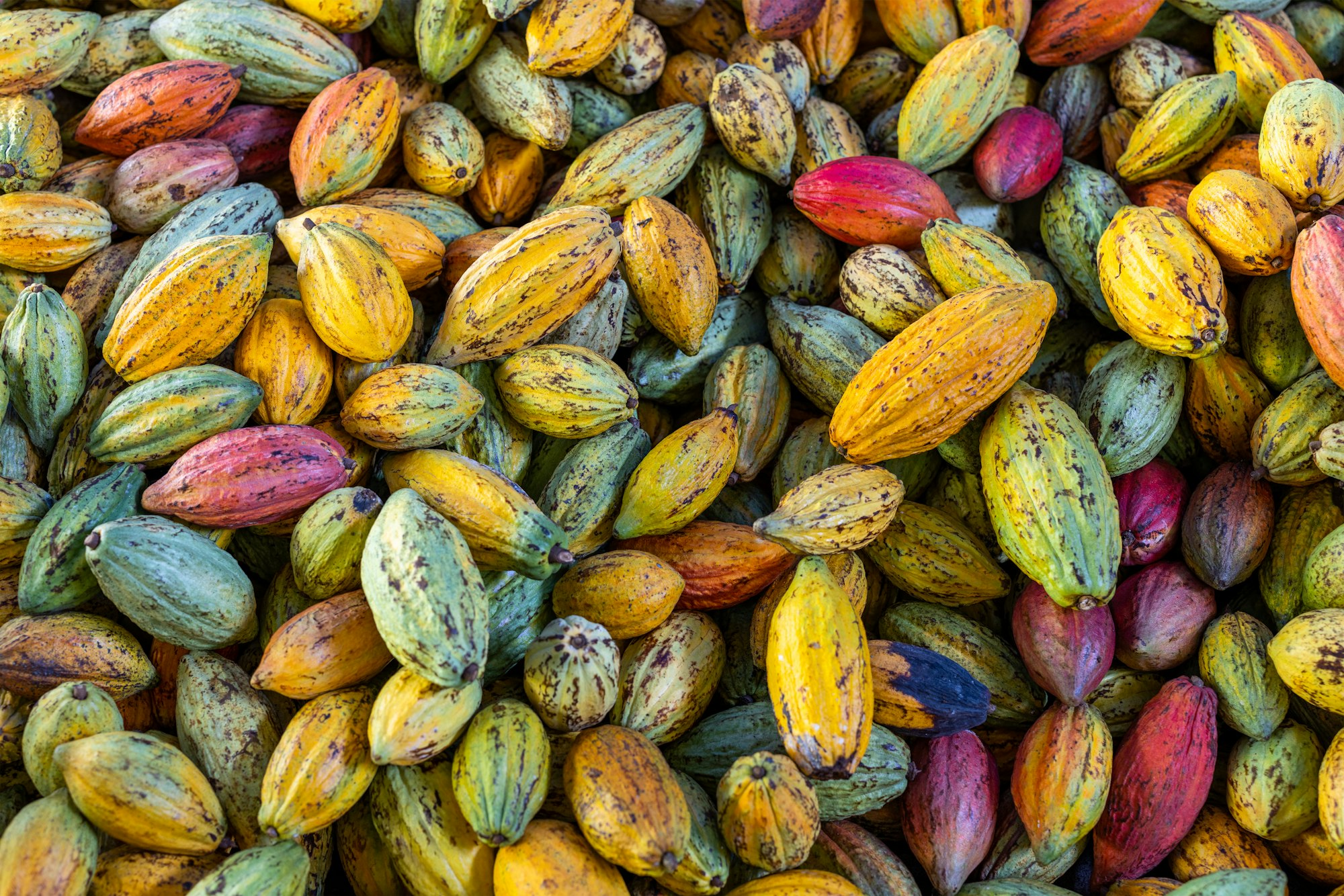
Though Africa might have some reputations that make the world wonder if it can ever recover, Africa still paints a picture of a fertile place. A place with great resources, good food, great fashion and great music. Many great people are from Africa, and even Elon Musk has a South African Origin. Though we might not be praised in history, people still want to do business with us. In Africa, many companies come because there is a thriving market, and businesses flourish here in Africa. Africans are educated, and they have contributed to many of the greatest innovations in the world today. And even the World Economic Forum noted that Africa hosts 50% of the fastest-growing economies in the world today.In West Africa, Ghana has been experiencing significant economic growth. In an article by John Oluwole of Business Insider, he lists countries in Africa that people can effectively do business with. Countries like Cote d’Ivoire, a country exporting cocoa beans, Seychelles who are exploiting the tourist sector and giving opportunities to foreign investors, Togo with its business reforms, Mauritius ranks as 13th on the world chart to do business with, Kenya with its remarkable economic growth and many others like Zambia, South Africa, Tunisia, Rwanda and Morocco. Also, Nigeria and Ethiopia are among the strongest capitalist nations in Africa. Nigeria is the most populous country in Africa, and it has been noted to be the hub of great music. Nigeria’s music is widely listened to across many nations of the world.
The Life and Rise of MAYA
Maya Angelou was a great poet, and activist and her works are well renowned in the world of art today. Her early life indicated the one of someone who had gotten to see the ugly side of life but still chose to stay afloat. One can see her resilience against all odds as she took up several jobs that belonged to different spheres of society, some of which greatly contrasted. She previously worked with Martin Luther King Jr and Malcolm X to fight for the right of black Americans.
Maya Angelou grew up abused and raped while growing up as a child, and this made her mute because she believed her abuser died. After all, she voiced out his name. But this never put her down, she was an aspiring child who used that moment to take to books and literature. At one point, she worked as a car conductor as the first black female to do so, and for this, she won an award. At the age of seventeen, she had a son. She later got married to Tosh Angelos and began her dancing career. In 1954 she got a divorce but she continued waxing strong in her dance career. Just as she was perfecting her dance, she was also perfecting her proficiency in various languages.
In 1959, she began focusing on her writing career by joining the Harlem Writers Guild. She wrote for The African Review, Ghanaian Times and many others, she even broadcasted for Radio Ghana.
She spent a lot of time in Ghana, but in 1965, she returned to the US and continued her singing career but still kept writing.



Comments
annabrown
Good Blog!
cmsmasters
Thanks.