Nutritional Benefits of Herbs and Spices from West Africa

West Africa has always been an important source of cultural heritage to all Africans and the entire black race.
One of our distinctive attributes is our traditional herbs and spices. Our ancestors relied heavily on this pre-colonization, and sadly, we are losing out on our cultural heritage to the Western world.

Nutritional Benefits of Herbs and Spices from West Africa

West Africa has always been an important source of cultural heritage to all Africans and the entire black race.

One of our distinctive attributes is our traditional herbs and spices. Our ancestors relied heavily on this pre-colonization, and sadly, we are losing out on our cultural heritage to the Western world. Here, we review 10 herbs and spices from West Africa, their nutritional benefits, and their role in health and wellness.

Herbs are herbaceous parts of plants that have excellent aromatic properties and are used to add flavour to meals. Examples of herbs include basil, rosemary, thyme, and curry. In contrast, spices are dried parts of plants, roots, or twigs that contain antioxidants and improve the quality of foods. Examples are nutmeg, cinnamon, and cloves. However, they both have significant similarities in their nutritional and health benefits.

The major constraint of herbal medicines in West Africa is the lack of further research and documentation of the herbs used in curing diseases. Most traditional practitioners died with their knowledge due to inadequate documentation of the usage of herbs and spices. Subsequently, this culminated in an increase in negligence of medicinal herbs by the younger West African generations.

Also, Western civilisation further accelerated the abandonment of organically and conventionally cultivated herbs and spices.

The majority of West Africans have ditched our local herbs and spices and embraced inorganic and chemically cultivated herbs despite that it’s widely reported to cause more harm than good. One of the significant harmful effects of chemically processed spices is the part they play in causing cancer among the civilised populace of West Africa.

This is because inorganic herbs contain many carcinogens or chemical compounds that increase cancer risk.

With the increasing reports of cancer, we should all see the need for and importance of returning to our ancient era of naturally grown foods, herbs, and spices.

For their identified and tentative health and nutritive benefits, culinary experts and health care providers advise consuming organic herbs and spices. Herbs and spices’ general nutritional benefits include antimicrobial, anti-inflammatory, and antioxidant qualities.

Hardneck varieties grow into large bulbs that can be planted in early spring and harvested in late summer or fall.

Softneck varieties have a much longer growing season—typically beginning around mid-spring—and produce smaller bulbs that are meant for use fresh rather than as store-bought whole heads or cloves.

Both garlic plants have their pros and cons; choose based on your climate, what you’re looking for from your crop, and your desired end product.

MAJOR HERBS AND SPICES FOUND IN WEST AFRICA AND THEIR USES

Here are our top 10 significant herbs and spices common in West Africa:

  1. AFRICAN/CALABASH NUTMEG (WHEDIABA)

Calabash nutmeg is one of the essential spices that add extra savoury to most tropical African foods and stews. It is majorly known for its natural sweetness and nutty taste. It is very similar to regular nutmeg. The brownish nut is rich in potassium, Iron, vitamin C, Vitamin E, folic acid, and magnesium and helps to lower cholesterol in the body. It also possesses stimulants and some antimicrobial properties. The bark, seeds, and leaves traditionally treat various African ailments such as a weak erection, nausea, eye diseases, and hypertension.

Calabash nutmeg botanical name is Monodora myristica. It is called Whediaba in Ghana, Ariwo in Yoruba, Ebenoyoba in Benin, Ehuru in Igbo, and Gudan Miya in Hausa languages.

2. ANISE SEEDS

Anise is a popular seed widespread in most African and European countries. It is mainly used as a spice in grounded form or as a whole seed. These seeds are produced from a flowering plant that grows up to 3 feet tall. They are brownish and come in small sizes. It has some oily content which can be extracted to add distinctive flavours to drinks and desserts. Anise seeds or oils must be consumed in moderation as excessive use can trigger some allergic conditions such as diarrhoea, vomiting and shortness of breath. Anise seed is rich in nutrients like iron and manganese, which are necessary for producing healthy blood cells and metabolic development. It helps reduce inflammation, which reduces inflammation linked to chronic heart diseases and balances blood sugar levels.

Traditionally, anise is used in the form of herbs called irugbin aniisi in Yoruba language, Osu kon in Ga language (a language in Ghana), Nkitinkiti in Twi language, iri anise in the Hausa language, and mkpuru anise in Igbo.

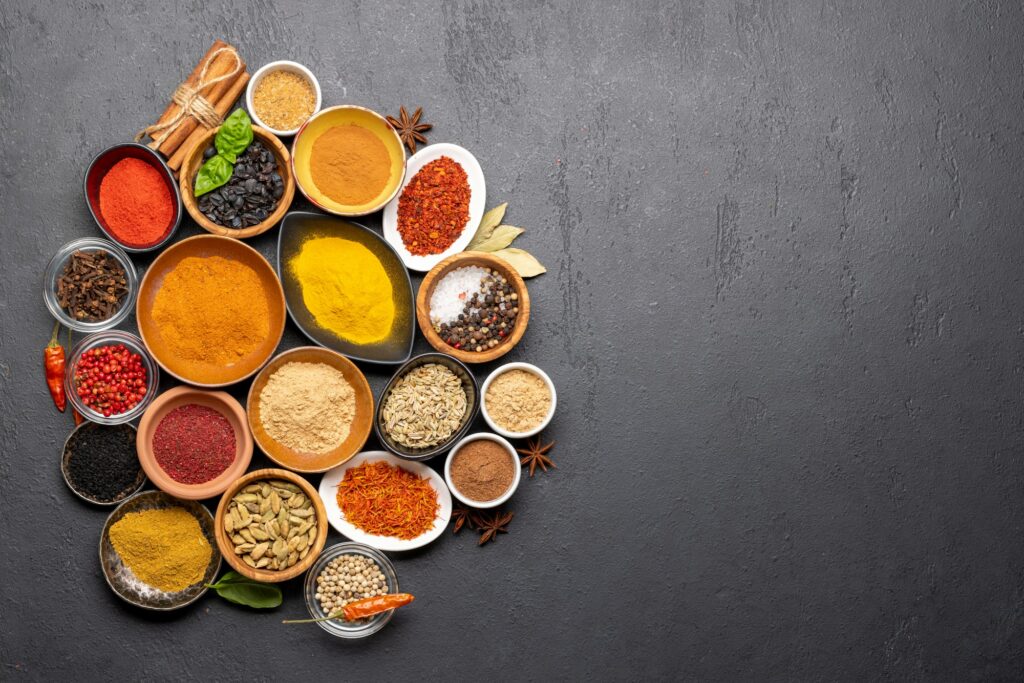
Various spices in bowls on stone table
3. CLOVES

Cloves are aromatic dried flowers obtained from a clove tree. It can also be used in grounded form for cooking or herbal medicine. Cloves are known uniquely as aromatic spices used in meals and traditional medicine.

They contain essential nutritive fibre, vitamins and minerals required for healthy growth and development. Also, it has some antioxidants that help reduce diabetes and heart diseases.

Besides, cloves help in improving functions with the help of eugenol found in it. It possesses some essential manganese in the mineral form that aids in repairing bones, increases hormone production and regulates blood sugar levels. Traditionally, cloves are used in treating stomach disorders and improving oral health. The Cloves’ botanical name is Syzygium aromaticum, kloovu in Igbo, kanafuru in Yoruba, albasa in Hausa, daoda amba, or pepre in Ghana languages.

4. GINGER

Ginger is a root spice that originated in Asia and has become widespread worldwide. Ginger provides an excellent taste for adding flavour to foods and helps in supporting well-being. It offers a wide range of health and nutritional benefits.

The taste of fresh ginger can be slightly peppery and spicy with a pungent aroma. However, the dried and ground ginger is a bit warm and has a little bit of sweetness. Grounded ginger is not as hot or strong as fresh ginger.

Ginger has anti-inflammatory content, which helps reduce swelling, relieves nausea, reduces heart diseases, reduces obesity, and manages blood sugar. Also, it improves bone health and generally strengthens the immune system.

The botanical name for Ginger is Zingiber officinale; it belongs to the family Zingiberaceae. Yoruba name is Ata-Ile, Hausa call it Chita, Igbo call it Jinja, and Gambians call it gingembre.

Here are some foods that taste great with ginger when added to them:

Banana bread, muffins, and apple cakes

Grilled chicken

Sushi and West African dishes

Ginger drinks and ginger tea

5. GARLIC

Garlic is one of the people’s favourite spices in West Africa. It is similar to onions, serves as a seasoning in major West African dishes, and has very few calories.

However, it is incredibly nutritious when added to soups and stews. Garlic produces a primary chemical compound called allicin which gives a pungent smell.

Aside from the irritating strong smell garlic makes, it has numerous health benefits to humans. Garlic helps prevent certain cancers and lowers blood pressure, cholesterol, and blood sugar. It may also improve sexual functions in both males and females.

Furthermore, it boosts immunity and treats some skin inflammations. The botanical name for garlic is Allium sativum. The Yoruba refer to it as Ayu, tafarnuwa in

Hausa, galiki in Igbo.

6. CURRY LEAVES AND THYME

Curry and thyme are dried aerial parts of some mint leaves, which are majorly used alongside other spices in most cuisines and dishes. In West Africa, curry and thyme are mainly used to add spices and aroma to foods and stews, especially party jollof rice. Both are highly rich in vitamins A and C, which help to boost immunity and fight colds. Each contains anti-microbial contents, improving heart health and possessing some natural diuretic properties. They stimulate appetite with their distinct aromatic smell.

Most West African languages refer to both spices as curry and thyme. However, note that they are different and can be used separately. Also, curry leaves can be added to meats and jollof rice whole instead of the grounded bite-sized form.

  1. LOCUST BEANS

Locust beans are dark brownish seeds that look like beans and have a rigid seed coat that needs to be detached, washed, cooked, and fermented before consumption. It’s a leguminous fruit produced from the locust bean tree, which is native to West Africa and can grow as high as 20 metres in length. As a tropical savanna tree species, the tree can survive with little water in the dry season and provides abundant leaves which serve as shade to the farmers.

The locust beans, which must be processed and fermented, are an essential seasoning and spice in most West African countries. Although many people find its aroma unpleasant, they possess an incredible, complex, and malty taste. It tastes sweet and feels a bit chocolatey. It can be eaten raw after fermentation and serve as a drink when blended. It’s primarily used to intensify the flavour and aroma of soups and stews.

It helps to improve good eyesight and boost the immune system. It also helps in weight loss and controls high blood pressure. Yoruba call it Iru, Dawa Dawa in Hausa, and Eware in Igbo.

  1. ALLIGATOR PEPPER

Alligator pepper is a close relative of grains of paradise and a member of the ginger family. It’s a spice native to West African countries. It is a significant ingredient in cooking pepper soup because of its spicy quality. Some herbalists use alligator pepper for fetish purposes which makes many people attribute it to spiritual uses. However, they possess numerous phytonutrients which benefit our health. It helps in treating wounds, malaria, fibroid, and gastrointestinal disorders. The botanical name for alligator pepper is Aframomum melegueta. Yoruba call it Ataare, Ose oji in Igbo and barkono in Hausa.

Most times, the season also contributes to the type of item that would be requested for. For example, there will be more orders for bed sheets and duvets during the rainy season.

“Our Instagram highlights a list of different products from our brands, and we take pride in the fact that they are the truth. We are bold to say that so far so good, our reviews have been encouraging.

“We also acknowledge that we have received negative reviews. In such cases,

we always work on correcting those issues immediately they arrive.

“In the past, people didn’t understand it, so they found it weird, but in recent times, Ankara designs have slowly eased into our way of life and people are beginning to applaud and appreciate the creativity that comes with it.

“Each time we introduce a new product, the responses we get from customers are encouraging. This shows that people are slowly but surely appreciating Ankara crafts and designs,” she said.

Ankara invaded the global fashion industry and made a lasting impression.

The African print is truly here to stay, blessing us with its vibrant colors, patterns and Designs.

9. CAMEROON PEPPER OR BLACK PEPPER

Cameroon pepper is a hot and spicy pepper derived from dried scotch bonnet pepper, used in major Nigerian dishes but in a minute quantity. It gives a distinctive spicy taste to soups and stews.

Cameroon pepper is rich in fibre and contains vitamins A, C, and K. It has some antioxidants that help prevent anti-ageing. It helps to relieve pains and improves cardiovascular health. Many people refer to it as black pepper.

  1. CINNAMON

Cinnamon is a popular spice obtained from tree barks, leaves, flowers, and roots of a tree species called Cinnamomum cassia. It is used mainly as an aromatic condiment in most West African dishes because of its distinctive aromatic smell.

Cinnamon has medicinal and antioxidant properties and is a healthy component of most diets. Cinnamon helps treat libido and reportedly tightens the female vaginal when consumed with milk. It also helps to lower blood pressure.

NUTRITIONAL VALUE AND HEALTH BENEFITS OF WEST AFRICAN HERBS AND SPICES

Here are some nutritional benefits of West African herbs and species:

AROMA AND FOOD ENHANCEMENT

Naturally, spices and herbs are flavour and aroma enhancers and have been used for centuries in culinary and traditional medicine.

However, they are not only flavour enhancers but also the powerhouse of most nutritional components of our foods. These are some of the nutritional benefits of West African herbs and spices:

MAJOR SOURCE OF PHYTONUTRIENTS

Herbs and spices are obtained from plants, making them a significant source of phytonutrients. Phytonutrients are plant nutrients that contain thousands of natural chemicals in the form of antioxidants and anti-inflammatory. They provide numerous functions for human health, such as promoting proper health, minimising ageing, and lowering the risks of a particular disease.

GREAT SOURCE OF ANTIOXIDANT

Many spices and herbs such as cloves, rosemary, oregano, sage, nutmeg, and cinnamon are excellent sources of antioxidants. Also, they are rich in phenolic compounds that help neutralise harmful radicals in the body, lowering cancer risk.

BOOST IMMUNE SYSTEM

Most spices and herbs like turmeric, ginger, garlic, and cloves contain a healthy quantity of vitamins A and C, which helps to enhance immunity and can be referred to as your natural pharmacy.

ANTI-INFLAMMATORY

Herbs and spices contain curcumin, a natural anti-inflammatory compound that helps relieve some inflammatory conditions in the body, such as arthritis and metabolism. Turmeric can also alleviate skin pains, and oil can be extracted from turmeric, which can be used to make perfumes.

WEIGHT LOSS

Aside from adding flavour to foods, many herbs and spices help burn fat, restore hormonal balance, and improve digestion. Incorporating herbs and spices into your meals can help increase weight loss.

ANTIBACTERIAL AND ANTIFUNGAL PROPERTIES

Many cultures worldwide have long used herbs and spices in traditional medicine due to their high anti-microbial activities, both in dried and fresh forms.

They help in fighting some bacterial diseases.

SUPPORT HEALTHY HEART

Spices and herbs help replace the taste of salts, prevent blood clots, and also help in reducing cholesterol levels which are needed for a healthy heart.

As a passionate food lover, writer, and intending recipe developer, I am always searching for those aromatic qualities where nutrition and health matter in my traditional way. Herbs and spices are perfect suggestions because they add aroma and flavour to foods and are also composed of exceptional and numerous health and nutritive benefits.

admin_wam

admin_wam

Keep in touch with our news & offers

Subscribe to Our Newsletter

What to listen next...

Media camera focuses on capturing the vibrant pulse of a buzzing media event

Ipolowo oja l’agunmu owo is a Yoruba adage that translates to; promotion is the magic potion for business, and this is true for the sports business. Sporting events are organized throughout the year in Nigeria and West Africa, yet, these events are held with little or no relevance; stadiums are nearly empty, there is insufficient …

Friends sitting on the court talking after a basket game

Extraordinary! That’s the word that best describes the performance of certain African countries in the 2022 Commonwealth Games and like we would always say, a win for one is a win for all. The 22nd edition of the Commonwealth Games officially known as XXII Commonwealth Games and commonly called ‘Birmingham 2022’ after the host city- …

Comments

Leave a Reply

Your email address will not be published. Required fields are marked *